
Robotic joint replacement surgery represents one of the most significant advancements in orthopedic medicine in recent decades. Unlike traditional joint replacement procedures, which rely heavily on the surgeon’s manual skills and experience, robotic-assisted surgery integrates cutting-edge technology to enhance precision, improve outcomes, and reduce recovery time. A robotic joint replacement surgeon is a specialized orthopedic surgeon trained to operate with robotic systems to perform procedures such as knee, hip, and shoulder replacements with exceptional accuracy.
The role of a robotic joint replacement surgeon extends beyond conventional surgery. These surgeons utilize advanced robotic platforms that offer three-dimensional imaging, real-time data analysis, and highly accurate guidance during the operation. Before the surgery, detailed imaging such as CT scans or MRIs of the affected joint is performed. The robotic system then creates a personalized surgical plan tailored to the patient’s anatomy, allowing the surgeon to visualize the optimal placement of implants and plan precise bone cuts. This preoperative planning ensures that the prosthesis fits perfectly, enhancing joint function and longevity.
During the surgery, the robotic system assists the surgeon by providing a high degree of control and precision. Contrary to popular misconception, the robot does not operate autonomously. The surgeon maintains full control throughout the procedure, using the robotic interface to guide instruments and implants with sub-millimeter accuracy. This reduces the risk of human error, minimizes damage to surrounding tissues, and ensures proper alignment of the joint components, which is critical for the success of the replacement and long-term patient outcomes.
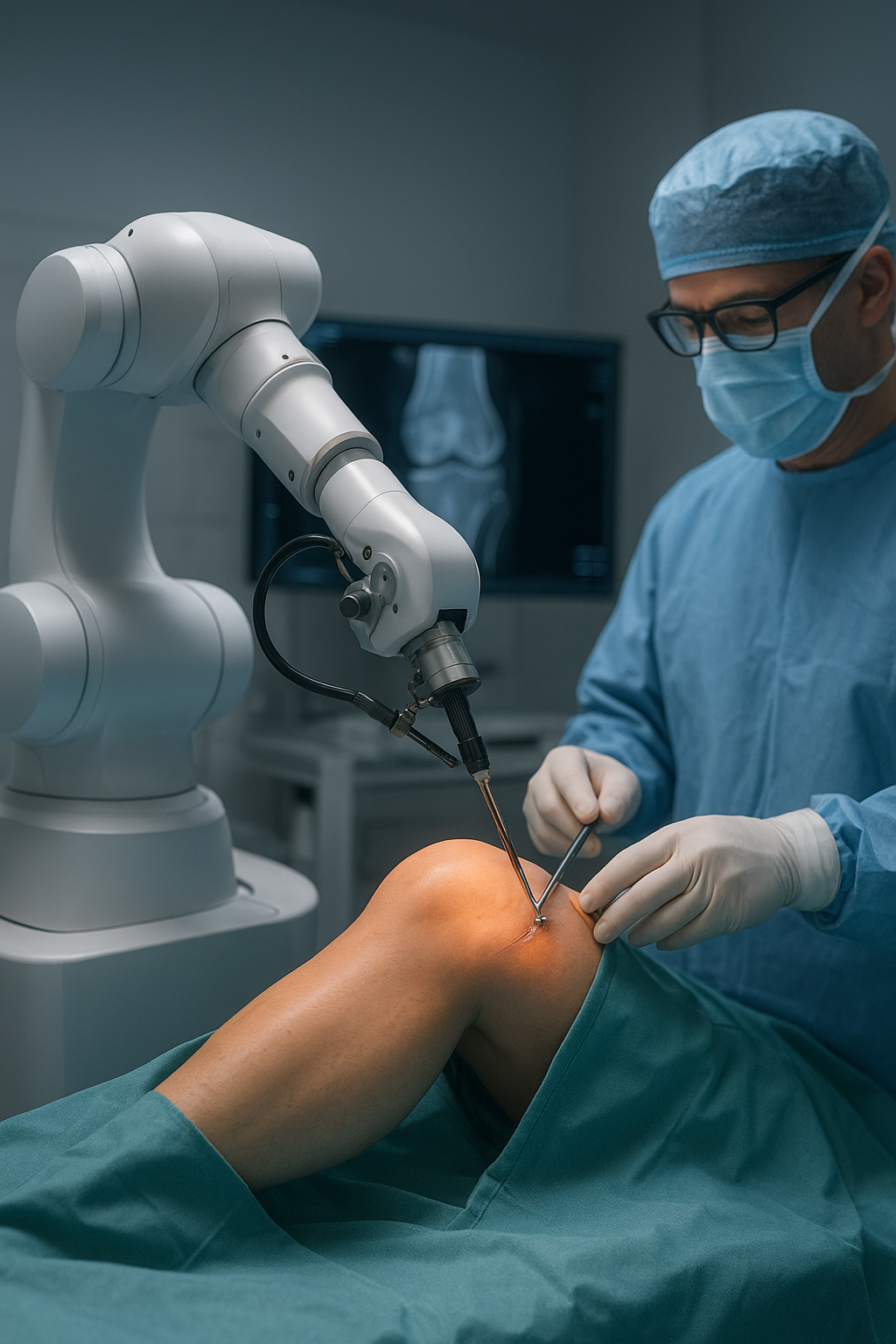
The benefits of robotic-assisted joint replacement are numerous. Patients often experience less postoperative pain, reduced blood loss, and smaller incisions compared to traditional methods. Additionally, the precise placement of implants helps restore natural joint movement and improves overall functionality. Studies have shown that robotic-assisted surgeries can lead to faster recovery times, allowing patients to return to daily activities sooner. For older patients or those with complex joint deformities, robotic-assisted surgery can be particularly advantageous, providing enhanced safety and predictable results.
Training to become a robotic joint replacement surgeon requires extensive orthopedic expertise coupled with specialized robotic system certification. Surgeons must undergo rigorous training to understand both the technology and its clinical applications, as well as the nuances of patient-specific surgical planning. Continuous education is essential because robotic systems are constantly evolving, integrating artificial intelligence and advanced imaging techniques to further improve surgical outcomes.
In conclusion, robotic joint replacement surgeons are at the forefront of a transformative era in orthopedic surgery. By combining surgical skill with advanced robotic technology, they deliver highly accurate, patient-centered care that improves the quality of life for individuals with joint problems. As robotics continues to evolve, these surgeons will play a pivotal role in shaping the future of joint replacement, offering patients safer procedures, faster recovery, and better long-term results.